Summary
Radon is widely misunderstood, and those misunderstandings often prevent homeowners from testing or taking action. This post addresses common radon myths—especially those relevant to Ontario homes—and explains the facts every homeowner should know.
Why Radon Myths Are So Common
Radon is invisible, odourless, and naturally occurring, which makes it easy to dismiss or misunderstand. Add in outdated information, half-truths, and assumptions based on home age or construction, and it’s no surprise that many Ontario homeowners believe radon “isn’t an issue for them.”
Unfortunately, these myths can delay testing—and delay can mean prolonged exposure.
Myth #1 – “Radon Isn’t a Problem in New Homes”
This is one of the most common—and dangerous—misconceptions.
The Fact:
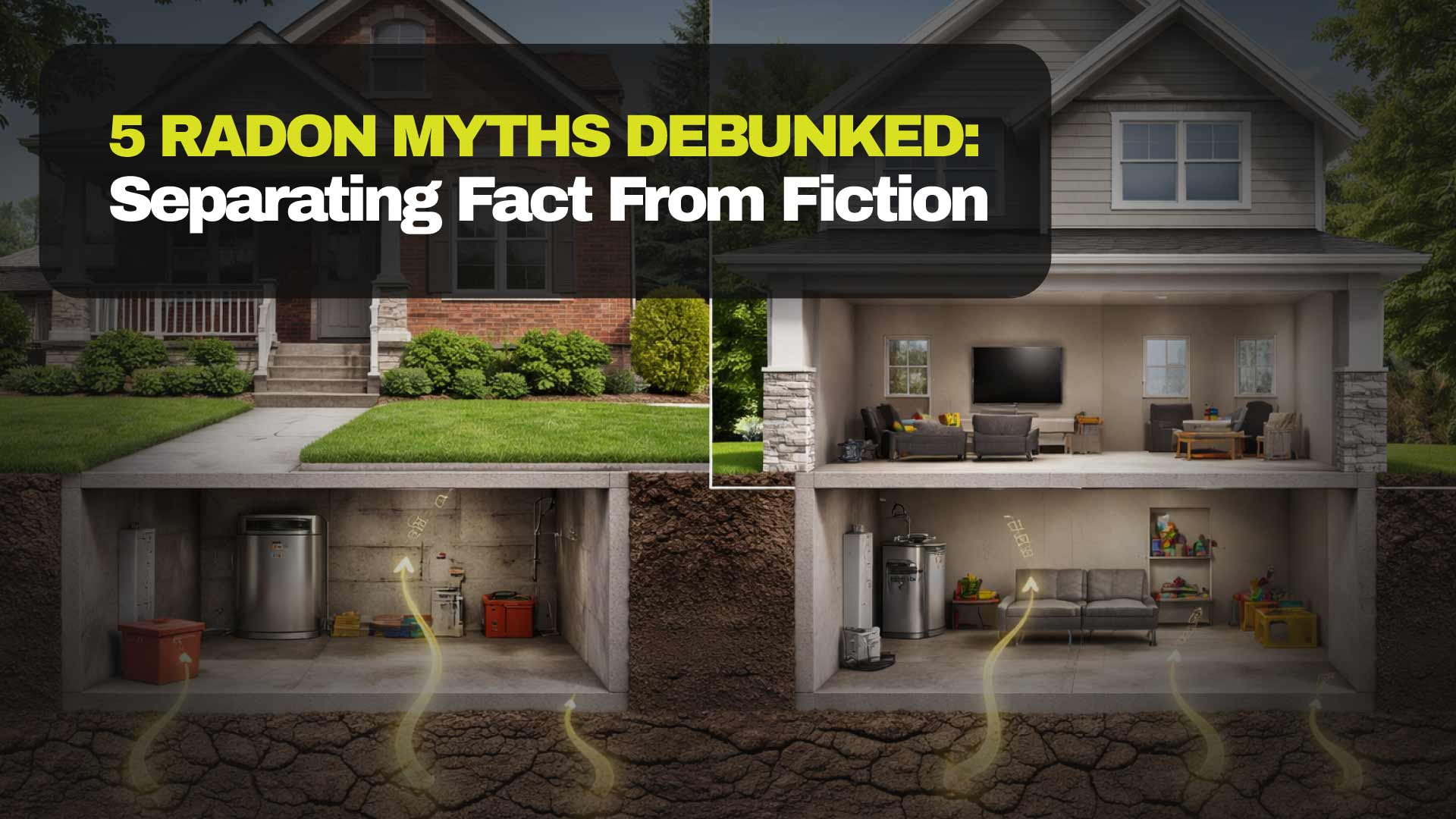
New homes in Ontario can have equal or higher radon levels than older homes.
Modern construction practices focus on energy efficiency, which means tighter building envelopes. While this improves heating and cooling efficiency, it can also trap radon indoors. Even homes built to the Ontario Building Code with radon rough-ins are not radon-safe unless tested and mitigated if necessary.
Newer does not mean safer when it comes to radon.
Myth #2 – “Short-Term Tests Are Enough”
The Fact:
Short-term tests can be useful, but they do not provide a complete picture.
Radon levels fluctuate daily and seasonally due to weather, ventilation, and soil conditions. Health Canada recommends long-term testing (90+ days) to accurately assess average exposure.
- Short-term tests can help identify very high levels.
- Long-term tests confirm whether mitigation is truly needed.
In Ontario, the most accurate testing typically occurs during fall and winter, when homes are sealed and radon levels peak.
Click here to learn more about why winter is a good time to test for radon.
Myth #3 – “If My Neighbour’s House Is Fine, Mine Is Too”
The Fact:
Radon levels can vary dramatically from house to house—even on the same street.
Soil composition, foundation design, construction methods, and airflow all affect radon levels. Two identical-looking homes can produce completely different test results.
The only way to know is to test your own home.
Myth #4 – “Radon Isn’t Dangerous Unless You’re a Smoker”
The Fact:
Radon is the leading cause of lung cancer among non-smokers in Canada.
While smoking significantly increases risk, radon alone is responsible for approximately 16% of lung cancer deaths in Canada, according to Health Canada. Non-smokers exposed to high radon levels are still at serious risk.
Myth #5 – “Fixing Radon Is Complicated and Expensive”
The Fact:
Radon mitigation is straightforward, effective, and affordable compared to the health risks.
- Most mitigation systems are installed in one day
- Typical costs range from $2,000–$3,000
- Proper systems reduce radon levels by 90% or more
Compared to the cost—financial and personal—of lung cancer treatment, mitigation is a small investment.
Watch: Common Radon Myths Explained
This short video provides a helpful overview of several common radon myths and why they persist:
The Bottom Line for Ontario Homeowners
Radon doesn’t care how old your home is, how clean your air smells, or what your neighbours’ test results show. Myths create false reassurance—and false reassurance leads to inaction.
Testing is simple. Mitigation works. And awareness saves lives.