Summary
Radon gas is a silent threat that can lead to lung cancer even in people who have never smoked. Real-world stories from survivors and advocates across Canada help illustrate the very real human cost of radon exposure and underscore why testing and mitigation matter.
Radon Can Affect Anyone—Not Just Smokers
Radon is the second leading cause of lung cancer in Canada after smoking, yet many people mistakenly believe it only affects smokers. Radon is odorless, colorless, and tasteless, meaning it can be present at dangerous levels in homes without anyone knowing. Personal stories help put a human face on these statistics and make the risk relatable.
Story 1 — Kerri Mossing: Early Detection and Advocacy
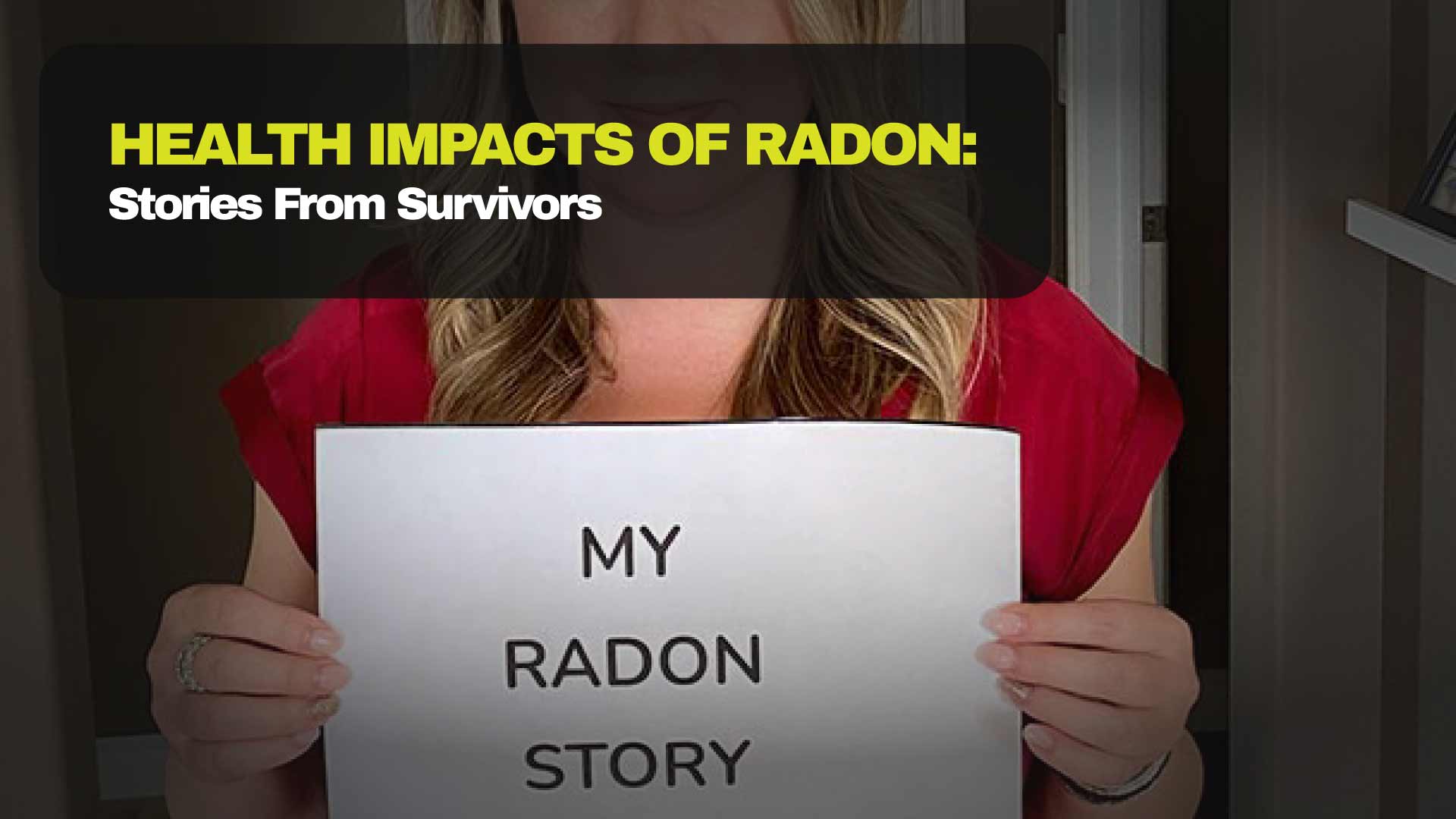
One powerful example comes from Kerri Mossing, a radon-induced lung cancer survivor. Despite being a healthy mother of three who had never smoked, Kerri was diagnosed with stage-2 radon-related lung cancer. After surgery and chemotherapy, she became cancer-free and committed herself to raising radon awareness across Canada. Kerri was featured as a radon ambassador and works to encourage homeowners to test their homes for radon before it’s too late.
Read more about Kerri’s story: Home Radon Test Program — My Radon Story
Story 2 — Janet & Alan Whitehead: Prevention and Awareness
Another compelling story is that of Janet and Alan Whitehead. Janet was diagnosed with lung cancer despite never having smoked. When their former Ottawa home was tested, radon levels were around 3,200 Bq/m³, over 16 times Health Canada’s recommended limit. Her cancer, the couple believes, could have been prevented with earlier testing and mitigation. Today, they advocate widely for radon awareness, education, and preventive action for homes, workplaces, and schools.

Home Radon Test Program — Janet & Alan Whitehead’s Story
Story 3 — Dr. Kong Khoo: A Medical Professional Affected
In a story that underscores radon’s unpredictable nature, Dr. Kong Khoo — an oncologist who treats lung cancer — found himself diagnosed with stage-I lung cancer that he later attributed to radon exposure in his own home. As someone who treated patients for similar illnesses, Dr. Khoo described his diagnosis as a shock and urged homeowners to test and mitigate radon proactively.
Read more stories like Dr. Khoo’s on CARST.
Why These Stories Matter
Each of these survivors — and others like them — highlights a few key truths about radon:
- Radon doesn’t discriminate; it can affect anyone, including non-smokers and health professionals.
- Many people are unaware they are at risk until after a diagnosis.
- Radon-induced lung cancer is preventable with testing and mitigation.
These stories aren’t just emotional — they reflect a real public health issue that affects thousands of Canadians each year. Health Canada estimates that radon exposure contributes to approximately 16% of lung cancer deaths in Canada, and many of these cases could be avoided by taking simple action.
Read more stories from Lung Saskatchewan.
Take Action — Test, Mitigate, Prevent
The only way to know if a home has dangerous radon levels is to test for it.
- Long-term testing (90+ days) provides the most accurate picture of year-round exposure.
- If levels exceed 200 Bq/m³, mitigation by a certified professional can reduce radon to safe levels.
Choosing to test and mitigate is a proactive step that can protect you and your family — and ensure you don’t become another statistic or another story of loss.