
Radon in Rental Properties: Responsibilities of Landlords and Tenants
Radon exposure isn’t just a homeowner concern—it affects renters too. This post breaks down landlord and tenant responsibilities for radon testing and mitigation in Ontario rental properties.
Summer Renovations: Ensuring Radon Safety During Home Improvements
Renovations like basement finishing, flooring upgrades, and ventilation changes can unknowingly raise radon levels. This post explains how to protect your family by testing and mitigating radon during home improvements.
Radon and Real Estate: What Homebuyers and Sellers Need to Know
Radon exposure is a growing concern in real estate transactions across Southern Ontario. This article explores how radon affects property value, why testing is essential for both homebuyers and sellers, and what steps you can take to protect your investment and your health.
The True Cost of Radon: What Lung Cancer is Really Costing Canadians
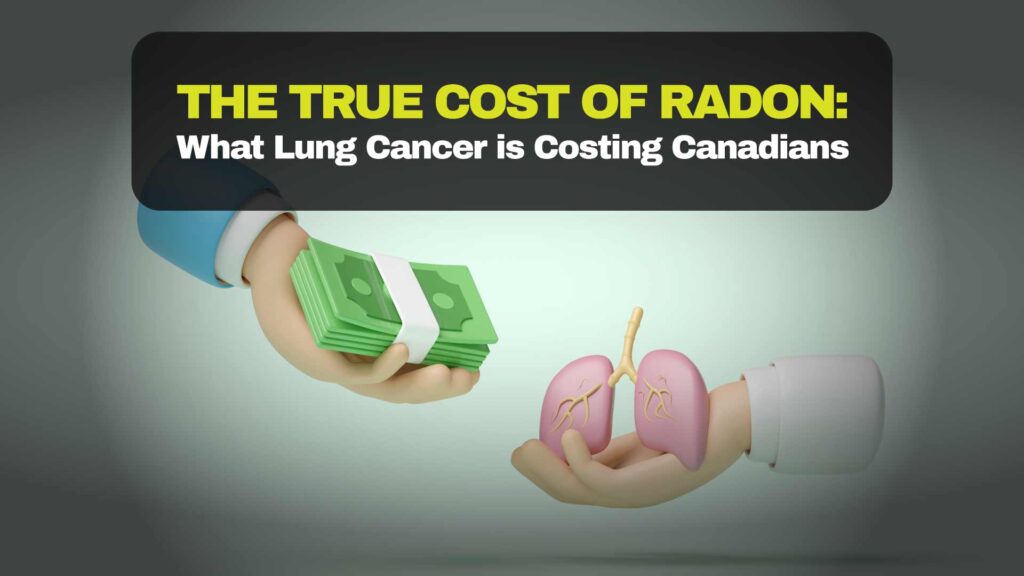
When we think about home safety, we often consider fire alarms, carbon monoxide detectors, and security systems. But what about radon—a silent, invisible, radioactive gas that is the second leading cause of lung cancer in Canada? At a recent radon information conference, experts shared alarming new data highlighting the immense burden of radon-induced lung cancer on Canadians—both in human and economic terms. Let’s break it down and explore why addressing radon is not just a health issue but a financial one. The Numbers: How Radon-Linked Lung Cancer Adds Up Recent national estimates show that radon exposure leads to approximately 2,893 new lung cancer cases each year in Canada, with Ontario accounting for over 10,600 total lung cancer diagnoses annually—many of which are radon-related. While not every lung cancer case stems from radon, the correlation is significant. Radon is responsible for about 16% of lung cancer deaths in Canada, according to Health Canada. That equates to over 500 deaths annually in Ontario alone—many of them entirely preventable. The Cost to Canadians A detailed analysis from the Canadian Radon National Study presented at the conference outlines the staggering economic toll: Average Annual Cost of radon-attributable lung cancer: $511.9 million Daily Cost: $1.4 million Hourly Cost: $58,440 Every Single Minute: $974 This includes health care expenses, lost productivity, and premature death. The human cost, however, is immeasurable. Why Ontario Homes Are at Risk Ontario is a hotbed for radon issues due to its soil composition and colder climate, which keeps homes sealed tightly in winter months—trapping radon indoors. Surprisingly, even new homes built to modern codes are not immune. Health Canada estimates 1 in 5 homes in Ontario have radon levels above the safe guideline of 200 Bq/m³. Radon Mitigation Is Affordable—and Life-Saving While the financial cost of lung cancer is in the hundreds of millions, the cost to test and mitigate radon is relatively low: Compare that with the average treatment cost of a single lung cancer patient—over $100,000—and the return on investment becomes crystal clear. Protecting Your Home and Family If you haven’t tested your home for radon, especially in Ontario, now is the time. Long-term radon test kits are easy to use and should be deployed during colder months when windows and doors stay shut. If your levels exceed Health Canada’s guideline, certified radon mitigation professionals can help bring those levels down quickly and safely. Final Thought: Prevention Saves Lives and Dollars The financial data is sobering, but the takeaway is clear: radon is a preventable killer. We can avoid thousands of lung cancer cases and save millions in health care costs each year simply by testing our homes and taking action. It’s a small step with life-changing results.
Understanding Radon Levels: What Your Test Results Mean

Radon testing is essential for home safety, but understanding your results is just as important. Learn what different radon levels mean and how to take action if needed.
Spring Home Maintenance: Why It’s the Perfect Time to Test for Radon

Spring home maintenance isn’t just about cleaning—it’s about protecting your home. Learn why testing for radon in the spring can make a big difference in your indoor air quality and health.
Understanding Radon Gas and Tarion’s Warranty Coverage

Radon Gas: A Growing Concern for Homeowners In recent years, awareness of radon gas exposure has increased, especially among new home buyers. Health Canada released a report in 2012 stating that long-term exposure to radon gas could be responsible for up to 16% of lung cancer cases. As a result, more attention is being given to radon-related risks and mitigation measures in residential properties. Tarion’s Warranty Coverage for Radon Gas Tarion has established guidelines for addressing radon gas claims under its home warranty coverage. If radon levels exceed Health Canada’s recommended limit of 200 Bq/m³, the issue is eligible for coverage under Tarion’s warranty program. To ensure consistency in warranty decisions, Tarion employees follow a specific set of guidelines when evaluating radon-related claims. Radon Warranty Coverage Breakdown First-Year Warranty: Second-Year Warranty: Years 3-7: Major Structural Defect (MSD) Coverage: Limitations of Tarion’s Radon Coverage While Tarion provides some protection for homeowners dealing with radon issues, there are limitations to what is covered: Financial Cap on Radon Claims For purchase agreements signed on or after February 1, 2021, Tarion’s maximum warranty coverage for radon gas remediation is $50,000 per home. This coverage is intended to address the costs associated with mitigating radon levels that exceed 200 Bq/m³, as per Health Canada’s guidelines. For homes with agreements signed before February 1, 2021, the previous financial cap of $15,000 per home still applies. Homeowner Requirements for a Radon Claim To file a valid radon claim with Tarion, homeowners must provide the following documentation: Next Steps for Homeowners Lack of Awareness Among Homeowners Despite the availability of radon coverage under Tarion, many homeowners remain unaware of these protections. In many cases, builders do not proactively inform buyers about radon risks or warranty coverage. As radon awareness continues to grow, it is essential for homeowners to educate themselves and take proactive steps in testing and mitigating radon in their homes. Need Help with Radon Testing or Mitigation? For professional radon testing and mitigation services, contact Alder Creek Radon Gas Pros to ensure your home is safe from radon exposure.
Radon 101: What Every Homeowner Needs to Know

What is Radon? Radon is a naturally occurring radioactive gas that forms from the breakdown of uranium in soil, rock, and water. It seeps into homes through cracks in foundations, gaps around pipes, and other openings. Because it is colorless, odorless, and tasteless, radon can accumulate in indoor spaces without detection, posing significant health risks. The Health Risks of Radon Exposure Radon and Lung Cancer Exposure to elevated radon levels is a leading cause of lung cancer among non-smokers. According to Health Canada, radon exposure is responsible for approximately 16% of lung cancer deaths each year. Smokers who are also exposed to radon have an even higher risk of developing lung cancer. How Common is Radon in Canadian Homes? Health Canada’s National Radon Survey found that up to 44% of homes in certain regions exceed the recommended radon guidelines. While most testing has been conducted in residential properties, radon is also present in workplaces, schools, and commercial buildings. Radon and Building Codes in Canada National Building Code Requirements The National Building Code of Canada includes specific measures to facilitate radon mitigation in new constructions. These provisions make it easier to install a full mitigation system if post-occupancy radon testing reveals high levels. Key Building Code Requirements: Important Considerations for Homeowners While these building measures are valuable, they do not fix radon on their own. If radon levels are high, a mitigation system must be activated by a C-NRPP-certified Radon Professional. Homeowners should: Protecting Low-Income Canadians from Radon Exposure Ensuring that all Canadians have access to radon-safe homes requires additional measures, including: How to Reduce Radon Levels in Your Home Testing for Radon The only way to know if your home has high radon levels is to conduct a radon test. Short-term and long-term radon test kits are available, but Health Canada recommends a long-term test (at least 90 days) for the most accurate results. Professional Radon Mitigation If testing reveals radon levels above the recommended limit (200 Bq/m³), mitigation is necessary. A certified radon professional can install an active radon mitigation system, which typically involves: Take Action Today Radon is a serious but preventable health risk. Protect your family by:✅ Testing your home for radon.✅ Ensuring builders follow radon mitigation guidelines.✅ Advocating for stronger enforcement of building codes and workplace protections. Need Professional Radon Testing or Mitigation? Contact Alder Creek Radon Gas Pros for expert radon testing and mitigation services. Ensure your home is safe and radon-free!
Radon Potential with Home Inspections

Alder Creek Radon Gas Pros, Serving areas of Kitchener, Waterloo, Guelph, Stratford, Cambridge, Goderich, Woodstock and Southwestern Ontario. Radon Potential with Home Inspections The home purchase is one of the most important purchases you will make in your life time, therefore the home inspection is a very important aspect of this purchase. However, the inspection is only a visual inspection and not invasive. In most cases, the inspector can find hidden troubles of the home and inform you of these defects. By looking at the way the home is structured and the internal functions of the home, an extra set of eyes can report on many of these areas of the home to inform clients of defects normally not found by an untrained eye. During the home inspection, odour in the home can be detected. If so, Alder Creek Radon Gas Pros can help eliminate the odours and bacteria left behind from the previous owners with Ozone shock treatments. Alder Creek Radon Gas Pros can also can install a Terminator in the furnace duct system to help eliminate toxins in the air of the home. Radon testing should also be part of the home inspection process. When having this test completed in the home this should be completed by a licensed and qualified person. Alder Creek Radon Gas Pros carries this license. Alder Creek is a member of CARST which is the governing body for Radon. http://www.c-nrpp.ca
What is Radon?

Radon is the natural radioactive element uranium and is present everywhere in rocks and soil. The radio active decay of uranium produces radium, which in turn decays to Radon, a radiocative colourless and odourless inert gas. As it is a gas, it can move easily through bedrock and soil and escape into the outdoor air or seep into a home or building. All soil contains uranium, so Radon is present in all types of soils. Radon that moves from the ground to the outdoor is rapidly diluted to low concentrations and is not a health concern. The air pressure inside a building is lower than in the soil surrounding the foundation. This draws in the gases, including Radon , through openings in the foundation where it is in contact with the ground. This includes construction joints, gaps, around service pipes and support posts, floor drains and sums, cracks in foundation walls, and in floor slabs, and in openings in concrete block walls. Once inside the building, Radon can accumulate to high levels and becomes a long term health concern. Although High Radon concentrations are associated with some geological formations, types of soil, housing tye, and foundation construction vary so much from place to place that “Radon Potential maps” are poor indicators of the Radon concentration in an individual home. Even similar houses next to each other can vary different average Radon concentrations. The only way to know if a home has a high Radon concentration is to measure the Radon Concentration.